There’s a moment every international student experiences while planning to study abroad: you find your dream university, get excited about the opportunities, and then you see the cost. At that point, many begin to wonder whether scholarships are truly accessible or just something that sounds good on paper.
At the University of British Columbia (UBC), scholarships are very real and have helped thousands of international students pursue their education in Canada. However, there is an important truth many applicants overlook. The strongest candidates do not focus only on searching for scholarships; instead, they build a strong academic and personal profile that naturally attracts funding opportunities.
This guide is designed to keep things simple, clear, and practical. You will learn about the scholarship opportunities available for international undergraduate students at UBC, what the university looks for in successful applicants, and how to apply effectively without unnecessary confusion.
Why UBC is worth your attention (beyond the name)
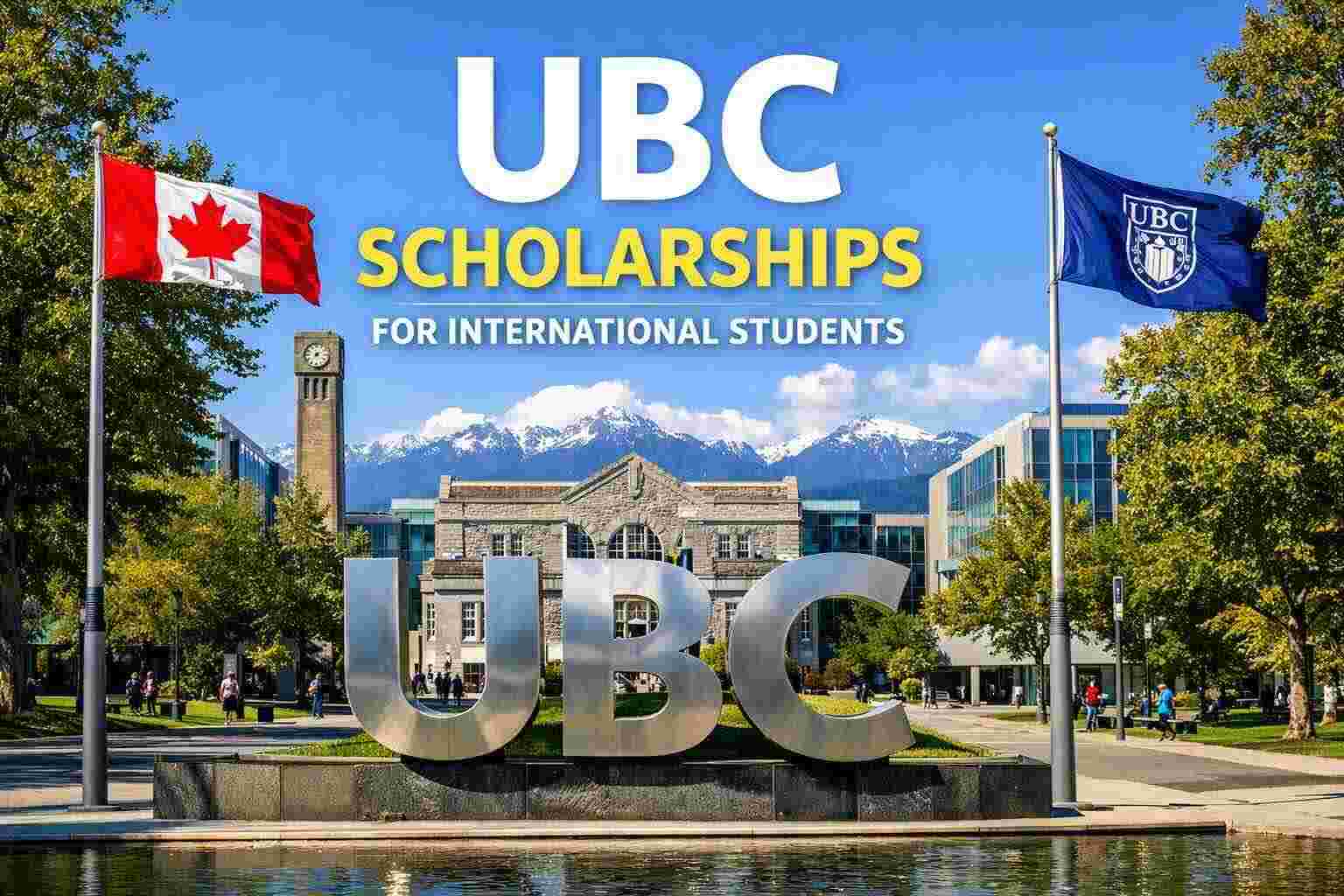
UBC is one of Canada’s most recognized universities, with a huge international community and two main campuses: UBC Vancouver and UBC Okanagan. On the admissions side, they don’t just accept strong students, they also invest heavily in financial support for international undergraduates, with more than $35M annually dedicated to awards and scholarships for this group.
That matters because it means:
- there are both automatic scholarships (you don’t apply separately)
- and competitive programs (you do apply separately, and they go deeper)
Let’s break down the main opportunities.
University of British Columbia Scholarship Details
1) Merit-based entrance awards (automatic consideration)
These are for students with strong academics and real involvement outside class. You don’t submit a separate scholarship application for these. If you apply to UBC by the admissions deadline, you’re automatically considered.
a) International Major Entrance Scholarship (IMES)
This is for exceptional international students entering undergraduate programs. It can be renewable for up to three additional years (so up to 4 years total), depending on meeting conditions and available funding. For the 2026/2027 academic year, the value is listed as $10,000 to $25,000 per year.
Who it’s meant for (in plain terms):
- new to UBC, coming directly from secondary school
- strong grades plus real extracurricular/community impact
- international student studying in Canada on a study permit
b) Outstanding International Student (OIS) Award
This is a one-time entrance award (not renewable), offered to qualified international students when they’re admitted. For the 2026/2026 academic year, it’s listed as $10,000 to $25,000.
Who it’s meant for:
- new to UBC (from secondary school or transferring from post-secondary)
- strong academics + strong involvement
Important detail most people miss:
UBC reviews admission and scholarships as separate processes. Scholarship decisions for these merit awards are typically made mid-February to end of April, and they usually notify only successful recipients.
2) International Scholars Program
This is the program people usually mean when they say “full scholarship.” It’s built for students who have:
- excellent academic performance
- leadership and meaningful community contribution
- and significant financial need (they do a financial assessment)
It’s not a quick form. It’s a proper application process, and it requires support from a nominator and a teacher referee.
UBC lists four award categories under this program, and you don’t choose which one you want; they consider you for what fits you.
A key rule: if you apply to the International Scholars Program, you will not be considered for the merit-based awards (like IMES/OIS).
Also, the status of this program changes each cycle (for example, the page notes that applications for the 2026 school year are closed), so always check the current cycle before planning around it.
3) UBC Okanagan automatic tuition awards (great if you’re choosing that campus)
If you’re planning for UBC Okanagan specifically, there are awards that can be surprisingly straightforward.
a) UBC Okanagan Global Elevation Award
- $8,000 applied to tuition
- renewable for up to 3 additional years (up to 4 years total or degree completion)
- applied in two instalments ($4,000 in Winter Term 1 and $4,000 in Winter Term 2)
- given to new international undergraduates who enroll at UBC Okanagan
How to apply: automatic after you accept your admission offer and enroll.
b) UBC Okanagan International Welcome Award
- $5,000 toward first-year tuition
- for international students who list a UBC Okanagan degree as their first choice, get accepted, and enroll in that first-choice program
- applied across Term 1 and Term 2 (with credit/registration conditions)
How to apply: also automatic once you accept the offer and enroll.
4) UBC Vantage College Scholarships (for students who don’t yet meet English requirements)
UBC has a pathway option called Vantage One for academically strong international students whose English doesn’t yet meet direct entry requirements. They have their own awards, and the page notes that timelines and eligibility vary across those awards.
If this is you, don’t write yourself off. Some students only become scholarship-strong after they improve English, stabilize grades, and show consistent involvement.
5) Scholarships for current international students (after you start)
UBC also has in-program awards for international students already studying there, with amounts and renewability depending on the award and campus.
This matters because even if you don’t win an entrance scholarship, you may still have support options later.
University of British Columbia Scholarship Requirements: what UBC generally looks for
Instead of dumping a long list, here’s the real picture of what drives most UBC scholarship decisions.
For merit-based awards (IMES/OIS)
UBC’s merit-based entrance awards focus on:
- strong academic achievement
- strong extracurricular involvement/community engagement
- being new to UBC and studying in Canada on a study permit
For the International Scholars Program (need + merit)
UBC is clear that you must meet all eligibility requirements, and they assess financial need using family income, expenses, and assets.
They also position this program around:
- leadership qualities
- exceptional community contributions
- outstanding academic performance
- meaningful financial support needs
One more detail: the International Scholars Program also lists certain degrees that are not eligible for these awards, so if you’re aiming for that program, double-check your intended degree on the official page before investing time into the application.
How to apply (simple, no stress)
Here’s the clean way to approach it:
Step 1: Apply for admission early, and do it properly
For IMES and OIS, applying by the admissions deadline is what puts you in the running automatically.
What “properly” looks like:
- choose your program carefully (not just what sounds popular)
- write a strong personal profile (not generic)
- show consistency in academics and activities
Step 2: If you’re targeting the International Scholars Program, plan ahead
This one is not last-minute friendly. It involves:
- getting a nominator and teacher referee
- completing a detailed award application
- and also completing the UBC admissions application as part of the process
Even if you’re not applying this cycle, understanding the process helps you prepare your profile earlier.
Step 3: Watch your email and timelines
UBC notes that scholarship decisions for merit awards are typically made mid-February to end of April, and they may only contact successful recipients.
For International Scholars, results are released on a rolling basis, with recipients notified by mid- to late April (for that cycle)
UBC scholarships can be life-changing, but the best way to win them is to treat your application like a serious project: clear story, strong grades, real involvement, and early planning.
If you want, paste your current profile (grades level, intended program, 3 activities you’re proud of, and which campus you prefer), and I’ll suggest which UBC scholarship path fits you best and how to position it without making it sound forced.